
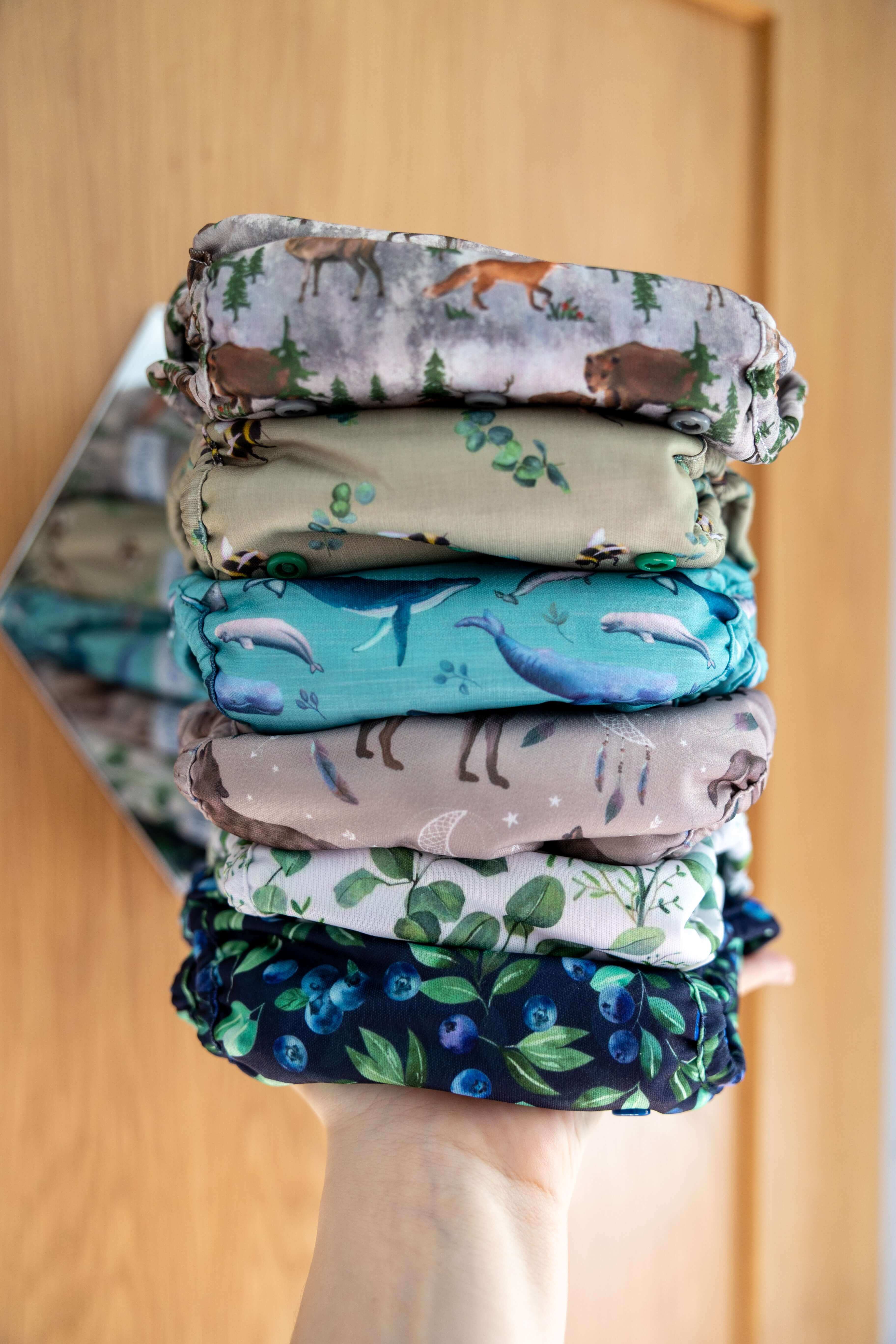
Types of Cloth Diapers Explained: Pockets, AIOs, Fitted, Prefolds, and More | Bayrli®
Types of Cloth Diapers Explained: A Clear Guide
Modern cloth diapers come in several designs, and the terminology can feel overwhelming when you are starting out. The good news is that every type works on the same basic principle: an absorbent layer to catch liquid and a waterproof layer to contain it. The differences are in how these two layers are combined and how much flexibility you have to customise.
This guide explains each type, how it works, and who it is best suited for.
Every Cloth Diaper Has Two Jobs
Before looking at specific types, it helps to understand that every cloth diaper system addresses two requirements: absorbency (catching and holding liquid) and waterproofing (preventing that liquid from reaching your baby's clothing). Some diapers combine both jobs into a single piece. Others separate them into distinct components. The trade-off is always between convenience and flexibility.
Pocket Diapers
What they are: A waterproof shell with an internal pocket where you insert absorbent pads.
How they work: Before each use, you stuff one or more inserts into the pocket through an opening at the back. The insert sits between a moisture-wicking inner liner and the waterproof outer shell. When it is time for a change, you pull the insert out and wash both pieces.
Pros: Highly customisable absorbency (add more inserts for overnight or heavy wetters). Quick drying because the shell and inserts dry separately. The inner liner wicks moisture away from your baby's skin.
Cons: Requires stuffing before each use. The entire diaper goes into the wash at every change.
Best for: Parents who want flexibility in how much absorbency they use at different times of day. Excellent all-purpose option.
The Bayrli Everyday Diaper is a pocket diaper with TPU waterproofing and organic cotton wicking liner.
All-in-One Diapers (AIOs)
What they are: A single piece with the absorbency sewn directly into the waterproof shell. Nothing to stuff, nothing to assemble.
How they work: Put it on like a disposable. When it needs changing, remove the entire diaper and put it in the wash. Replace with a clean one.
Pros: Simplest to use. No assembly, no stuffing, no separate pieces. Ideal for daycare, babysitters, or anyone unfamiliar with cloth.
Cons: Take longer to dry because absorbent and waterproof layers are attached. Less flexibility to customise absorbency (though some AIOs have a flap-style absorbent layer that can be supplemented with a booster).
Best for: Parents who prioritise ease of use. Daycare situations. Partners or family members who are sceptical about cloth.
The Bayrli Deluxe Diaper is an all-in-one with snap-in absorbency and TPU waterproofing.
Fitted Diapers + Waterproof Covers
What they are: A two-piece system. The fitted diaper is entirely absorbent and shaped to fit your baby. The waterproof cover goes over it to contain everything.
How they work: Place the fitted diaper on your baby and snap it closed. Place the waterproof cover over the top. When it is time for a change, remove the fitted and replace it with a clean one. If the cover is not soiled, wipe it down and reuse it for the next change. Covers typically last two to four changes before needing to be washed.
Pros: The highest possible absorbency, because the entire body of the diaper is absorbent fabric. The best system for overnight use and heavy wetters. Fewer covers needed because they are reused between changes.
Cons: Two separate pieces to manage. Bulkier profile under clothing than pockets or AIOs.
Best for: Overnight. Heavy wetters. Parents who want the maximum absorbency available.
The Bayrli Inner is a hemp fitted diaper with snap-in boosters. The Bayrli Outer is the matching TPU waterproof cover.
Prefolds
What they are: Rectangular panels of layered absorbent fabric, typically cotton, that are folded and placed inside a waterproof cover.
How they work: Fold the prefold into thirds (or another configuration), lay it inside a waterproof cover, and fasten the cover around your baby. When it is time for a change, remove the soiled prefold, place a clean one in the cover, and refasten. As with fitted-and-cover systems, the cover can be reused for multiple changes.
Pros: The most economical option. Versatile; can be folded in multiple ways to suit different ages and needs. Excellent for burp cloths and general cleanup when not being used as diapers.
Cons: Require folding at each change. Less trim than pocket or AIO diapers. Slightly steeper learning curve.
Best for: Budget-conscious families. Parents who want the most versatile, lowest-cost entry point.
Flats
What they are: Large, single-layer squares of fabric (cotton, bamboo, or a blend) that are folded into a diaper shape and placed inside a cover.
How they work: Similar to prefolds, but starting from a single unfolded square. There are dozens of folding techniques, ranging from simple to elaborate.
Pros: The most economical option of all. The fastest to dry. The most versatile; a flat can be folded for any size baby.
Cons: Requires more technique to fold. Less convenient than pre-shaped options.
Best for: Experienced cloth diaper parents or those who enjoy the process. Excellent as supplemental absorbency or boosters inside other diaper types.
Which Type Should You Start With?
If you are new to cloth diapering and want the simplest possible experience, start with all-in-one diapers. They work exactly like disposables and require no learning curve beyond getting the fit right.
If you want flexibility to customise absorbency for different situations (daytime, overnight, outings), start with pocket diapers. The stuffing step takes seconds and becomes automatic within a few days.
If you want the best overnight performance and are comfortable with a two-piece system, choose fitted diapers plus covers.
If budget is your primary concern, start with prefolds and covers. The ongoing cost is the lowest of any system.
Many families end up using a mix of types: pockets or AIOs for daytime and daycare, fitted-and-covers for overnight. There is no requirement to commit to a single system.
Our beginner's guide walks through the full process of getting started, and our Try It Kit lets you test the Bayrli system before committing to a stash.
Frequently Asked Questions
What is the easiest type of cloth diaper to use? All-in-one diapers are the easiest. They work identically to disposable diapers with no assembly required.
What is the most absorbent type of cloth diaper? Fitted diapers offer the highest absorbency because the entire diaper is made of absorbent fabric. They are the preferred choice for overnight use and heavy wetters.
What is the cheapest type of cloth diaper? Prefolds and flats paired with waterproof covers are the most economical system. The ongoing cost per change is the lowest available.
Can I mix different types of cloth diapers? Absolutely. Many families use pocket diapers or AIOs during the day and fitted diapers with covers overnight. Using the right type for each situation optimises both convenience and performance.