Why Are My Cloth Diapers Leaking? Every Cause and How to Fix It | Bayrli®
Why Are My Cloth Diapers Leaking? Every Cause and How to Fix It
Cloth diapers, when fitted correctly with adequate absorbency, should not leak. If yours are leaking, something specific is causing it, and in almost every case, it is fixable. Leaking is the most common frustration reported by cloth diaper parents, and it is also the most common reason people abandon cloth diapers prematurely. That is a shame, because the causes are well understood and the solutions are straightforward.
This guide works through every cause of cloth diaper leaking, from the most common to the least, with a specific fix for each. Start at the top and work down until you find your culprit.
Cause 1: Poor Fit
This is the most common cause of leaking, particularly for new cloth diaper parents, and the easiest to fix.
Signs: Leaks around the legs or waist. Wetness on clothing but the diaper's absorbency is not fully saturated when you check.
What is happening: The diaper is not sealed properly against your baby's body, and liquid is escaping through gaps before the absorbency has a chance to absorb it.
How to fix it:
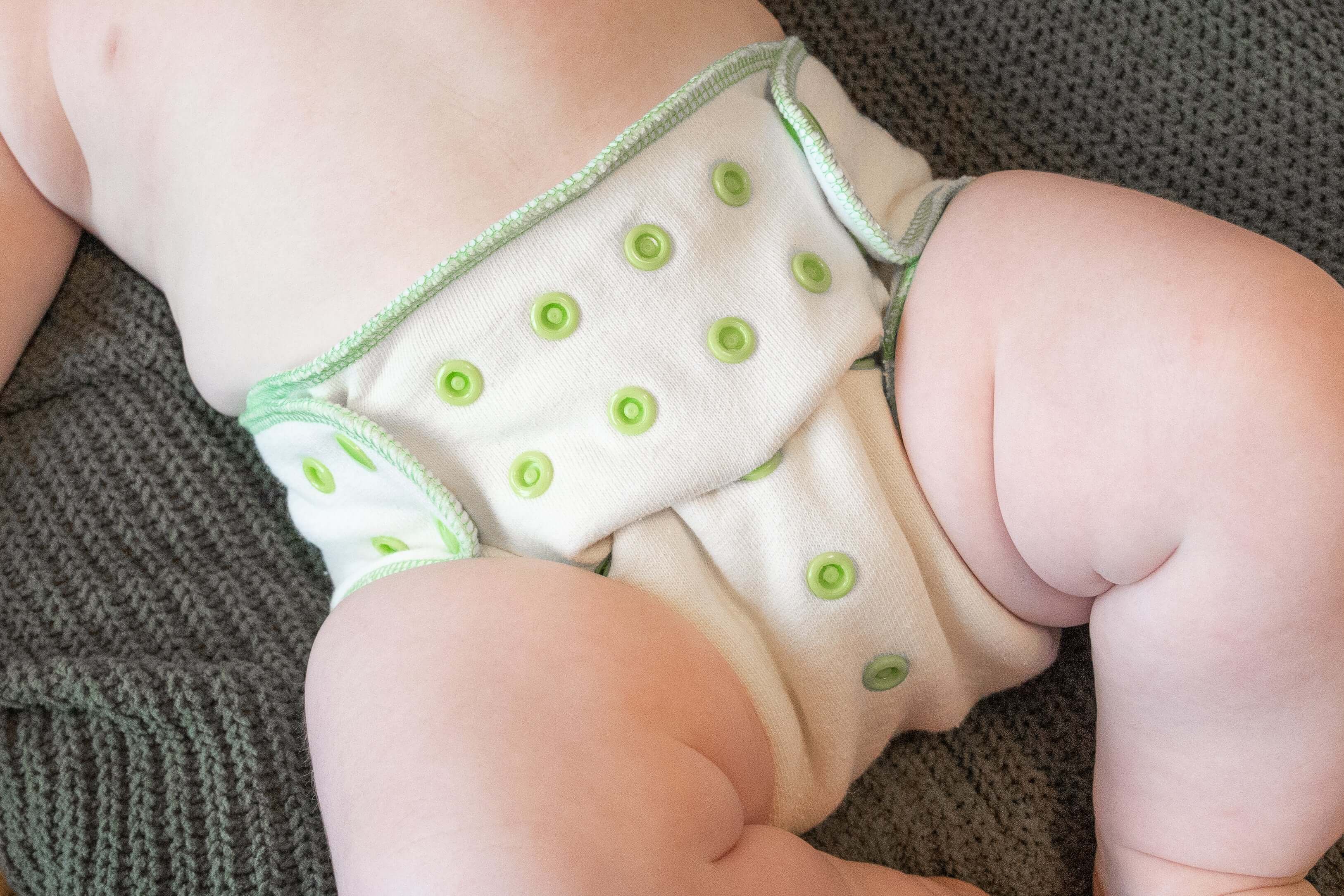
Check that the diaper sits in the crease of your baby's legs, not on the thigh. The elastic gussets should sit snugly in the leg crease like the elastic of underwear. If the gussets are sitting on the thigh, liquid will escape down the leg.
Ensure no fabric is folded outward or tucked under the elastic. Even a small fold of fabric creates a wick that draws moisture out of the diaper and onto clothing.
The diaper should be high enough at both the front and back. At the front, it should sit just below the belly button. At the back, it should cover the top of the bum crack. For boys, ensure the diaper is high enough at the front to contain the direction of urine flow.
Two fingers should fit comfortably between the waistband and your baby's tummy. Tighter than this restricts movement and comfort; looser than this allows leaks at the waist.
Our full fit guide covers this in detail with specific instructions for Bayrli products.
Cause 2: Insufficient Absorbency
Signs: The diaper's absorbency is completely saturated when you remove it. The leak is from overflow, not from gaps in the fit.
What is happening: Your baby is producing more urine than the diaper's inserts can hold between changes.
How to fix it:
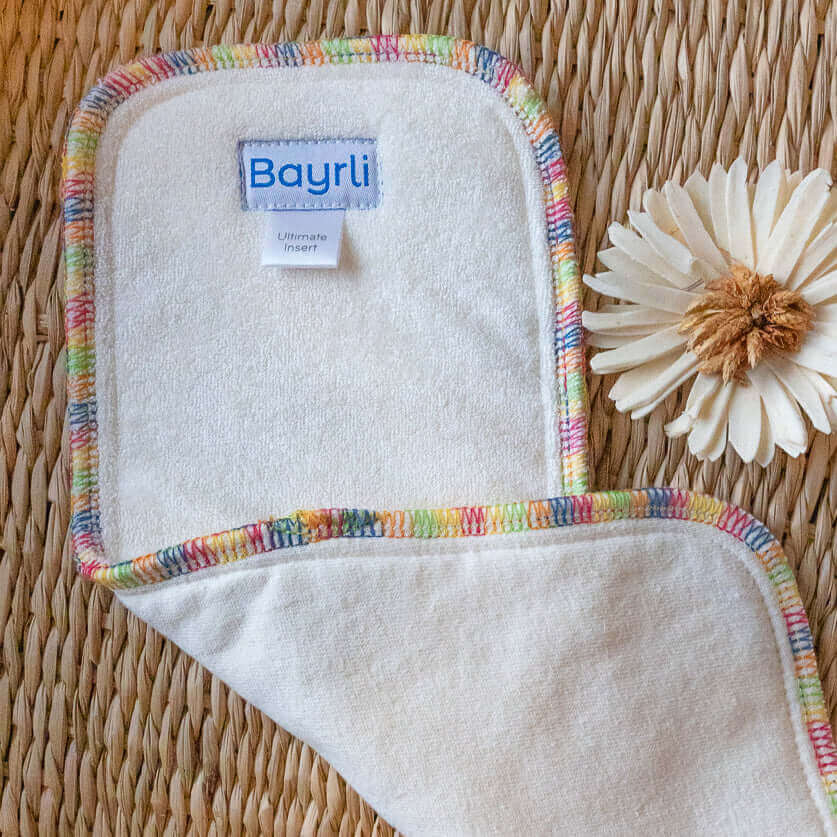
Add more absorbency. This is the simplest solution. If you are using a single insert, add a second. If you are using a pocket diaper, try pairing a fast-absorbing microfibre insert with a slow-absorbing hemp or bamboo insert for both speed and capacity.
Change more frequently. If adding absorbency makes the diaper uncomfortably bulky, consider changing every 90 minutes to two hours instead of every two to three hours.
For overnight use, you need dedicated overnight absorbency. Our Inner fitted diapers with their snap-in hemp and bamboo boosters paired with an Outer cover are designed specifically for extended wear. The Overnight Bundleincludes everything needed for leak-free nights.
For heavy wetters and toddlers who hold their urine and release large volumes at once, a fast-absorbing top layer (microfibre) paired with a high-capacity under layer (hemp or bamboo) is the optimal configuration.
Cause 3: Compression Leaks
Signs: The diaper is wet but not fully saturated. Leaks happen when your baby sits, is in a car seat, or is being carried, but not when lying down. The fit appears correct.
What is happening: External pressure is squeezing liquid out of the absorbent layers faster than they can reabsorb it. This is called a compression leak, and it is one of the more frustrating issues because the diaper appears to be working until pressure is applied.
How to fix it:
Reduce the number of insert layers. Counterintuitively, compression leaks are often caused by too much absorbency, not too little. Multiple stacked inserts create a thick absorbent mass that, when compressed, releases liquid like a squeezed sponge. If you have been double-stuffing a pocket diaper, try a single, higher-capacity insert instead.
Choose natural fibres over microfibre for the outer layers. Natural fibres such as hemp, bamboo, and cotton hold liquid more tenaciously under pressure than microfibre. If you are experiencing compression leaks with microfibre inserts, switch to a bamboo or hemp insert.
Ensure the absorbency is positioned correctly for your baby's anatomy. For boys, more absorbency should be toward the front. For girls, more should be in the middle. Mispositioned absorbency means liquid pools in the wrong place and has further to travel before being absorbed.
Cause 4: Repelling (Buildup)
Signs: When you pour a small amount of water on a clean, dry diaper, the water beads up on the surface or rolls off rather than being absorbed immediately.
What is happening: A coating of mineral deposits, detergent residue, fabric softener, or diaper cream has built up on the fabric fibres, creating a barrier that repels moisture rather than absorbing it.
How to fix it:
You need to strip your diapers. Stripping removes the residue coating and restores absorbency. After stripping, identify and fix the root cause: hard water, insufficient detergent, fabric softener use, or diaper cream without a liner.
If the repelling is localised to specific diapers that have been in contact with diaper cream, those diapers may need a targeted treatment. Soak them in hot water with a small amount of original blue Dawn dish soap, gently scrub the absorbent layers, and rinse thoroughly before running through a normal wash cycle.
Cause 5: Elastic or Waterproofing Wear
Signs: Diapers that previously worked well are now leaking despite correct fit and adequate absorbency. The elastic at the legs feels loose or stretched. The waterproof layer feels crinkly, stiff, or appears to be separating from the fabric (delamination).
What is happening: After extended use, elastics lose tension and waterproof layers degrade. This is normal wear, though the timeline varies dramatically by product quality.
How to fix it:
If the elastic has lost tension, the diaper may need to be retired or have its elastics replaced. Some brands offer elastic replacement; check your warranty.
If the waterproof layer has delaminated (the laminate is peeling away from the base fabric), the diaper is no longer waterproof and needs to be replaced. Delamination is permanent and cannot be reversed. It is more common in diapers using PUL waterproofing than in those using TPU, which bonds thermally rather than with adhesive and is inherently more resistant to delamination.
At Bayrli, our diapers are designed to withstand hundreds of wash cycles, and our warranty covers manufacturing defects. If your Bayrli diapers are experiencing premature elastic failure or delamination, contact us.
Cause 6: Diaper Is On Backwards or Inside Out
This sounds absurd, but it happens more often than anyone admits, particularly with pocket diapers at 3am. If the absorbent side is facing outward and the waterproof side is facing inward, the diaper will not contain anything. A quick check of the orientation before fastening saves a lot of laundry.
A Systematic Troubleshooting Approach
If you are not sure which cause applies to your situation, work through this sequence:
First, check the fit. Are the gussets in the leg creases? Is the diaper high enough front and back? Is there any fabric wicking outward?
Second, check saturation. When you remove the leaking diaper, is the absorbency fully saturated (insufficient absorbency) or only partially wet (fit issue or compression leak)?
Third, test for repelling. Pour water on a clean, dry insert. Does it absorb immediately or bead up?
Fourth, check the hardware. Examine elastics for tension and the waterproof layer for crinkliness or delamination.
This sequence will identify the cause in virtually every case. If you work through all four checks and cannot resolve the issue, contact us. We respond to every message and have troubleshot thousands of leaking situations.
Frequently Asked Questions
Why did my cloth diapers start leaking suddenly after months of working fine? The most common cause is buildup. Over time, mineral deposits or detergent residue accumulate in the fibres and reduce absorbency or cause repelling. Strip your diapers and review your wash routine. A less common cause is that your baby's urine output has increased as they have grown, and the same absorbency configuration is no longer sufficient.
Do cloth diapers leak more than disposables? No. A well-fitting cloth diaper with adequate absorbency is as leak-resistant as a disposable diaper. In many configurations, particularly overnight, cloth diapers outperform disposables because you can customise the absorbency to your baby's needs.
What is a compression leak? A compression leak occurs when external pressure, such as sitting, being in a car seat, or being carried in a sling, squeezes liquid out of the absorbent layers. It is most common when multiple layers of insert are stacked. The fix is to reduce layers and switch to natural fibre inserts that hold liquid more tenaciously under pressure.
How do I stop cloth diapers leaking at night? Use a dedicated overnight setup with high absorbency. A fitted diaper such as the Bayrli Inner with snap-in hemp and bamboo boosters, paired with a waterproof Outer cover, provides 10 to 12 hours of leak-free protection for most babies.